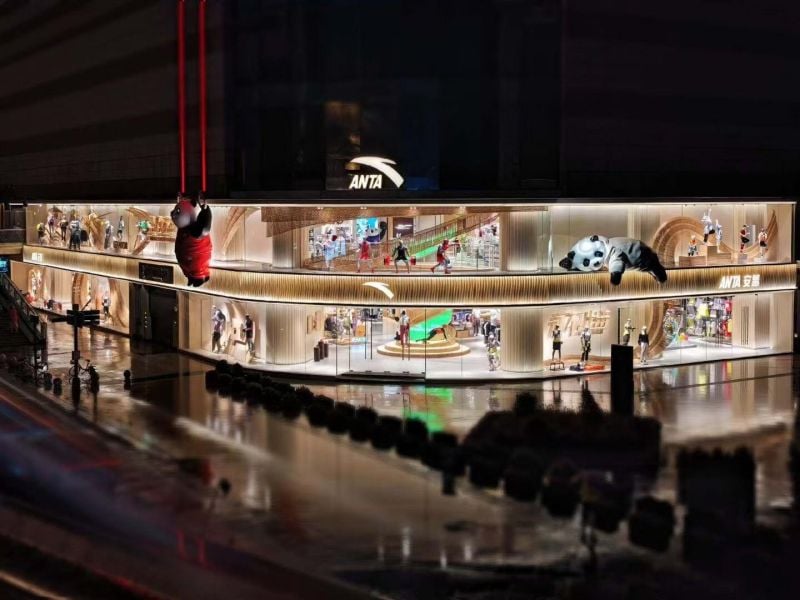
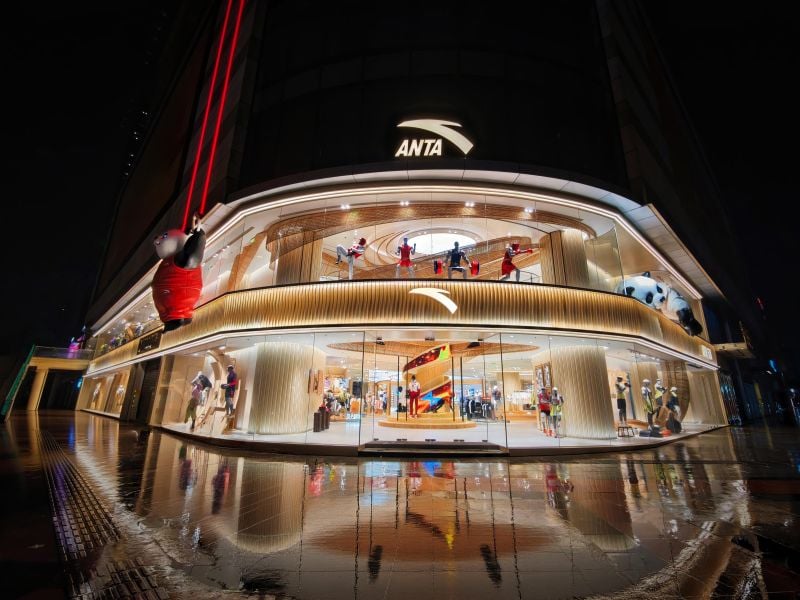
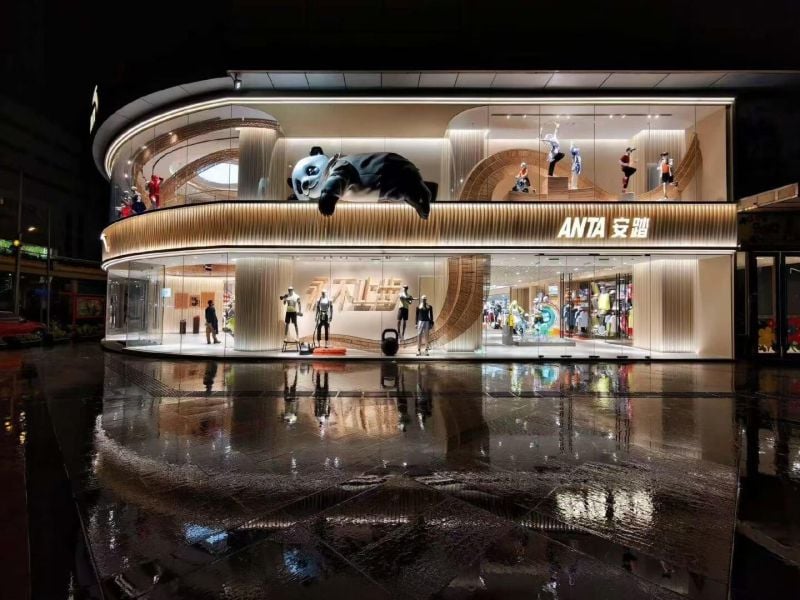
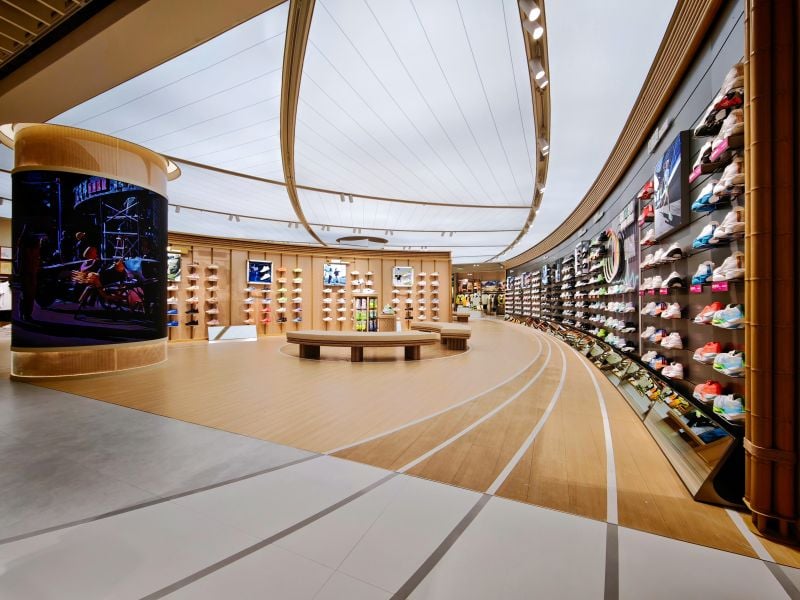
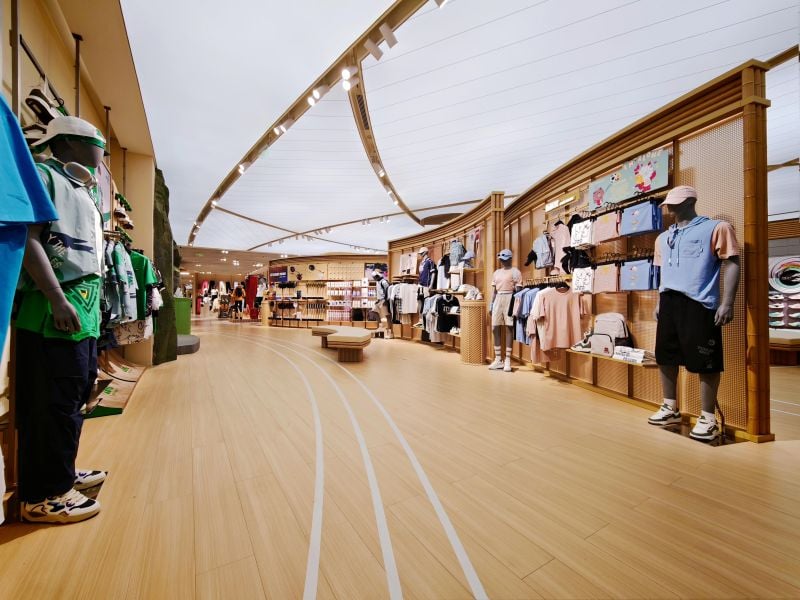
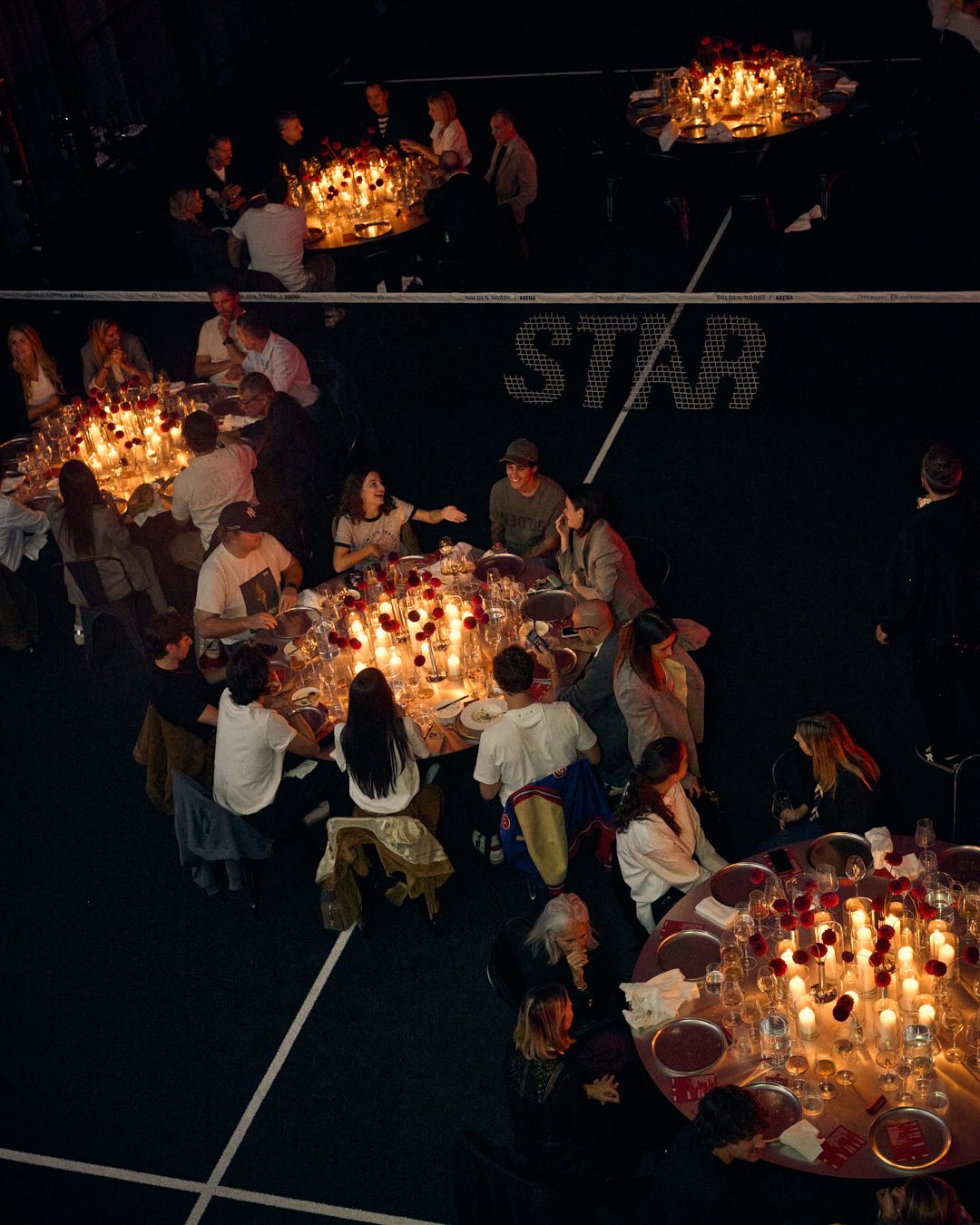
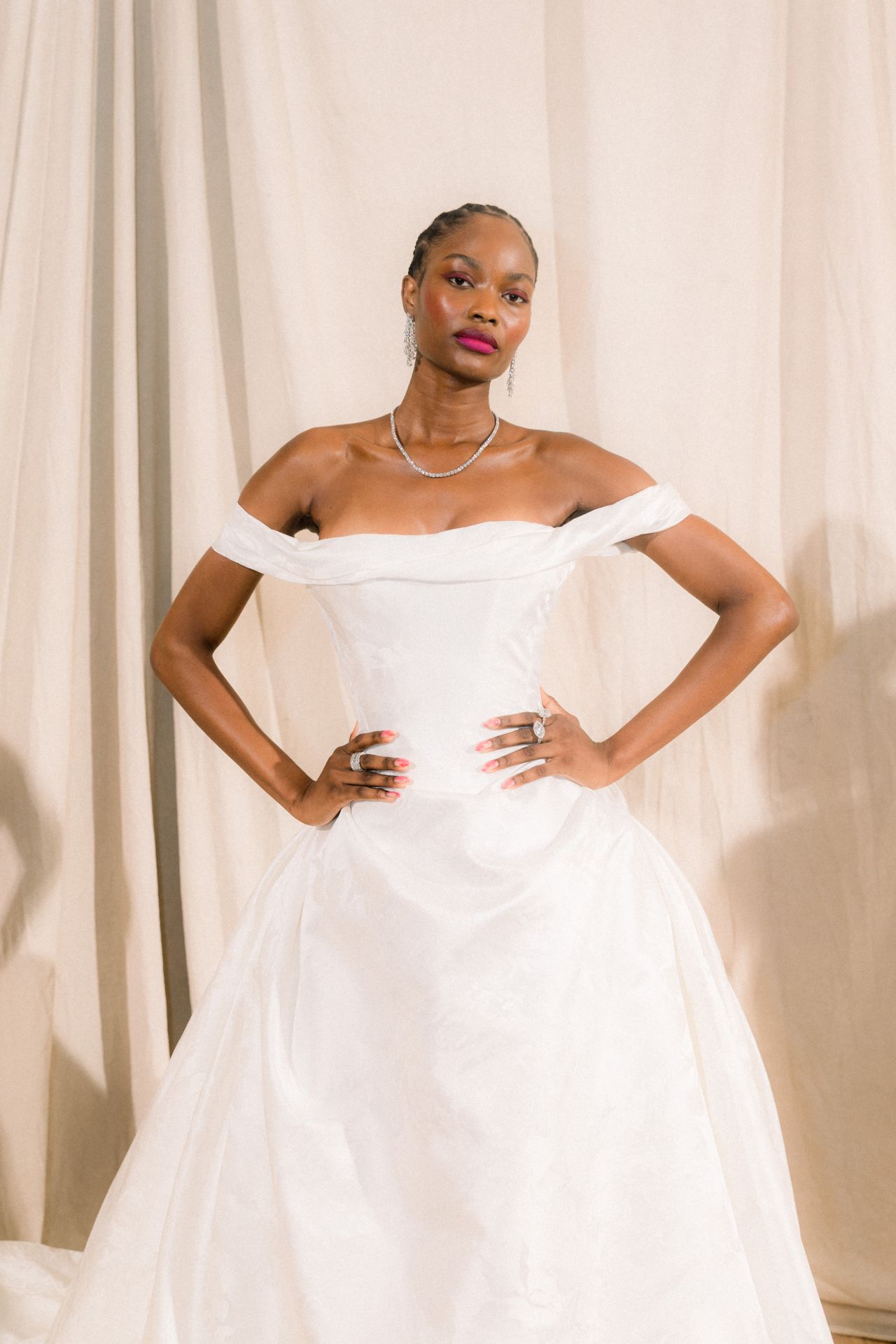
ANTA Sports has opened its latest ARENA flagship in Chengdu, China, and it’s one of the most strategically loaded retail moves the sportswear giant has made in recent years. Spanning 2,000+ square meters, the multi level space brings together several of the brand’s sub brands under a single roof, including SV (Sneakerverse), Champion, Women, and Kids. It’s not just a store. It’s a physical answer to one of the biggest questions facing the brand right now: can a multi brand empire hold together in a single space?
ANTA Group currently operates 8 distinct store formats, Arena, Palace SV (Sneakerverse), Champion, Super Anta, ZERO Concept, Kids Linglong, and Campus Store, each with its own positioning, price ladder, and target audience. The ARENA format sits at the very top of this hierarchy, designed to be experience led rather than purely transactional. For a brand that built its dominance on scale, this shift toward immersive retail is a significant gear change.
The Numbers Behind the Strategy
ANTA Sports’ most recent financials tell a story of a group thriving at the portfolio level, but with its core brand navigating a new phase. The group’s total revenue reached a record RMB 80.22 billion in 2025, up 13.3% year on year. The ANTA main brand segment, however, grew at a comparatively modest 3.7% to RMB 34.75 billion, a sign that the core business is maturing even as the broader group accelerates.
Operating profit margin for the group ticked up slightly to 23.8%, reflecting disciplined operations. But the pressure points are real. Inventory levels have risen, and the main brand is no longer in pure growth mode. ANTA is entering what analysts are calling an efficiency and clarity phase, and the ARENA format is a direct response to that.
One Roof, Multiple Identities
The challenge the Chengdu ARENA faces is one that any multi brand retailer understands well. Bringing together entry level products, mid tier performance gear, and premium lifestyle offerings in one space risks muddying brand perception rather than sharpening it. ANTA has structured its store hierarchy specifically to manage this tension, but the ARENA format puts all of it on display at once.
Ding Shizhong, Executive Director and Board Chairman of ANTA Sports, said, “In 2025, amid a complex and rapidly changing environment, we once again delivered resilient growth by staying true to our ‘Single focus, Multi‑brand, Globalization’ strategy. The Group’s revenue surpassed RMB 80 billion for the first time, reinforcing a competitive advantage built on a multi brand portfolio and strong operational capabilities.” The emphasis on operational discipline is telling: this isn’t growth for growth’s sake. It’s a deliberate attempt to reconcile scale with brand identity.
Localization as a Retail Tool
China’s retail landscape increasingly rewards brands that feel culturally embedded in their local context, and Chengdu is one of the country’s most active consumer markets, with a distinct identity of its own. Flagship stores in China today are expected to anchor themselves in local culture not to stand out, but to feel familiar. For ANTA, that means the ARENA isn’t just a global brand showpiece, it’s designed to resonate with Chengdu consumers specifically.
This localization approach reflects a broader industry truth: in China, global scale and local relevance aren’t opposites. The brands winning at flagship level are the ones that manage both simultaneously. ANTA’s 21.8% market share in China’s sportswear market, the largest in the industry, gives it both the reach and the responsibility to get this balance right.
Scale With Something to Prove
The ARENA format is, at its core, a test. Can 1 space sell entry level products, elevate brand perception, compete with premium labels, and still stay coherent? ANTA has the infrastructure, the market share, and the financial firepower to attempt it. But with 8 store formats running in parallel and a main brand growing at a slower pace than the wider group, the stakes for getting this right are higher than they might appear from the outside.
Stores like the Chengdu ARENA are no longer just about opening new doors. They are where ANTA is working out what its brand actually stands for, and whether that can be communicated in a single, unified space.