Why Luxury Brands Are Spending Billions to Put Their Logo on a Race Car

This strategic pivot to sports marketing highlights the necessity of aligning brand values with market demands.

Jeanel Alvarado
By
Jeanel Alvarado
Jeanel Alvarado is a marketer and retail strategist, leveraging 15+ years of cross-disciplinary expertise in retail, e-commerce, technology, consumer and shopping trends. She is the former...
6 Min Read
Why Luxury Brands Are Spending Billions to Put Their Logo on a Race Car

Formula 1 is no longer just a motorsport. It is a global media platform with 827 million fans, a growing female audience, and a sponsorship market on track to cross $3 billion in 2026. That shift did not happen overnight, and it has created one of the most valuable brand arenas in the world right now.

The Audience Changed, and Brands Followed

For most of F1’s history, the sport attracted a narrow audience: affluent, older, and predominantly male. That profile has changed sharply. According to Formula 1’s own 2025 season review, 42% of the global fanbase is now female, up from 37% in 2018, with women accounting for three in four new fans added to the sport. F1’s global fanbase has grown from around 450 million in the mid-2010s to 827 million by the end of 2025, making it the world’s most popular annual sporting series.

Netflix did much of the heavy lifting. The Drive to Survive docuseries, now in its eighth season, brought in younger, more diverse, and more globally distributed fans. With that demographic came entirely new sponsorship categories. Brands like LEGO, LVMH, Charlotte Tilbury, and KitKat have all entered F1 in recent years, all brands that would not traditionally align with a motorsport audience. This mirrors a broader pattern in luxury brand marketing, where reaching new and younger audiences has become the central challenge.

LVMH: The Biggest Bet

The clearest signal of luxury’s commitment to F1 came in October 2024, when LVMH signed a landmark 10-year global partnership with the sport. WWD, which broke the story, reported that sources with knowledge of the matter put the figure at under $100 million annually, though other outlets cite figures ranging up to $150 million per year. LVMH has not confirmed the financial terms. The Maisons involved are Louis Vuitton, Moët Hennessy, and TAG Heuer, and between them they cover the sport’s most visible touchpoints.

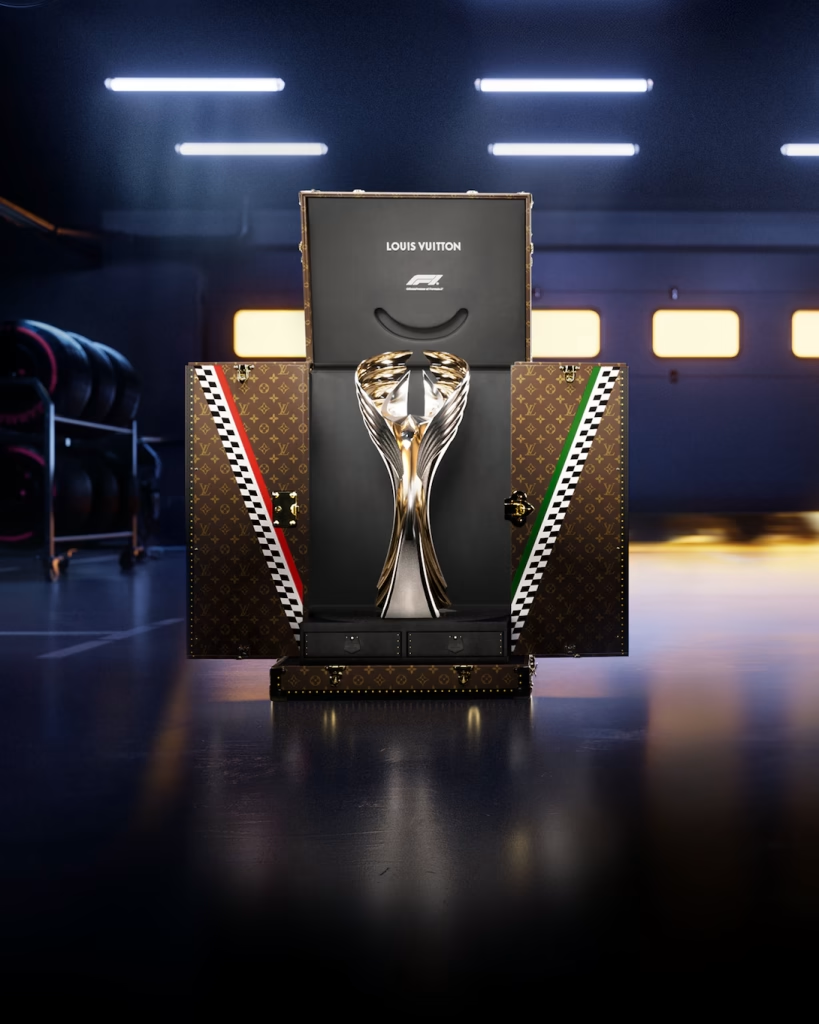
The activation strategy runs across the full calendar. Louis Vuitton crafts bespoke trophy trunks for each Grand Prix, a tradition that began specifically at Monaco in 2021. In December 2025, Louis Vuitton deepened its commitment by becoming title partner of the Monaco Grand Prix itself. The 2026 race is now officially named the Formula 1 Louis Vuitton Grand Prix de Monaco, taking place June 5 to 7, marking the sixth consecutive year the fashion house plays a prominent role at Monaco. TAG Heuer has taken over as the sport’s official timekeeper. Moët & Chandon handles the podium celebrations, a relationship with F1 that stretches back to the sport’s founding year in 1950.

“It will be undeniable that we are the main sponsor, because we’ll have premium and exclusive visibility on the circuit.” Pietro Beccari, Chairman and CEO, Louis Vuitton

Why Now Specifically

The numbers explain the timing. Total F1 sponsorship spending is expected to rise 15% year over year, from $2.5 billion in 2025 to more than $3 billion in 2026, according to Ampere Analysis. Liberty Media’s own financial results show that F1 series sponsorship revenue more than doubled between 2019 and 2024 to approximately $636 million. The commercial window that opened after Drive to Survive is still wide, and brands that moved early are locking in long-term positions before costs rise further.

LVMH’s bet also makes strategic sense given its own business context. LVMH’s full-year 2025 results showed a 5% revenue decline year over year, with its Fashion and Leather Goods and Wines and Spirits divisions both in negative growth territory. Associating three of its most recognisable houses with F1’s growing, younger, global audience is part of a broader plan to reactivate brand desire — a challenge explored in more depth in RetailBoss’s coverage of the luxury slowdown.

What This Means for Luxury Marketing

F1 gives luxury brands something traditional advertising cannot: a live, emotional, globally broadcast moment. Every podium is a Moët & Chandon product placement. Every trophy presentation is a Louis Vuitton moment. Every timing graphic carries TAG Heuer’s name. According to F1 and Motorsport Network’s 2025 Global Fan Survey, 76% of fans believe sponsors enhance the race experience, and one in three are more likely to purchase from an F1 partner brand.

The Monaco Grand Prix, two weeks away on June 7, will be the most concentrated luxury brand showcase on the F1 calendar. Superyachts in the harbour, Vuitton trunks on the podium, and an estimated 70 million viewers watching globally. For luxury, there is no better stage right now.

TAGGED:
Share This Article
Follow:
Jeanel Alvarado is a marketer and retail strategist, leveraging 15+ years of cross-disciplinary expertise in retail, e-commerce, technology, consumer and shopping trends. She is the former Senior Managing Director of the School of Retailing at the University of Alberta. Jeanel’s insights appear in Nasdaq, Entrepreneur, Fortune, TIME, and the US Chamber of Commerce, among others, with recurring commentary on top retailers and brands for financial markets, consumer insights, shopping trends, tech Innovation, and the luxury sector.