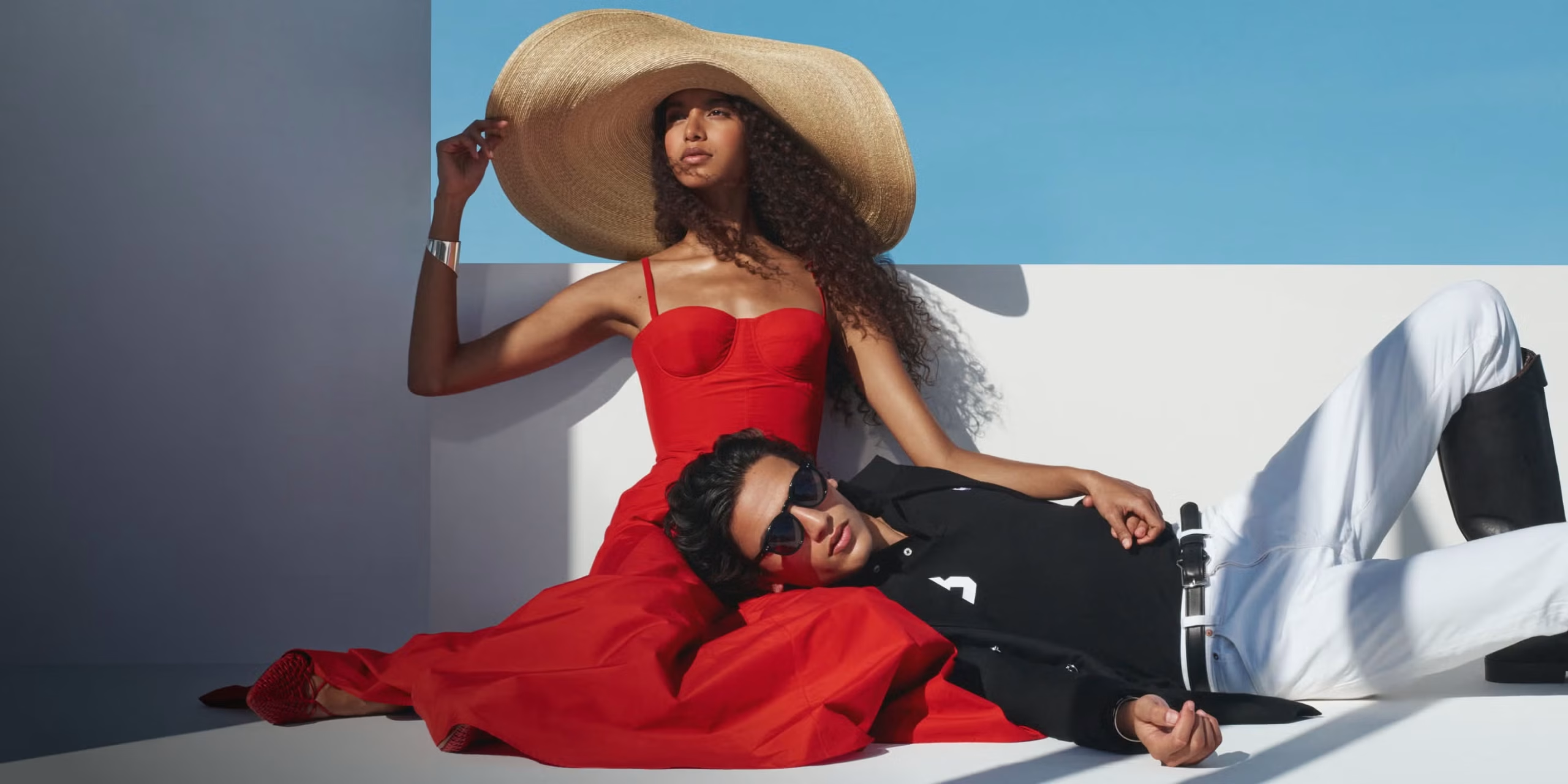


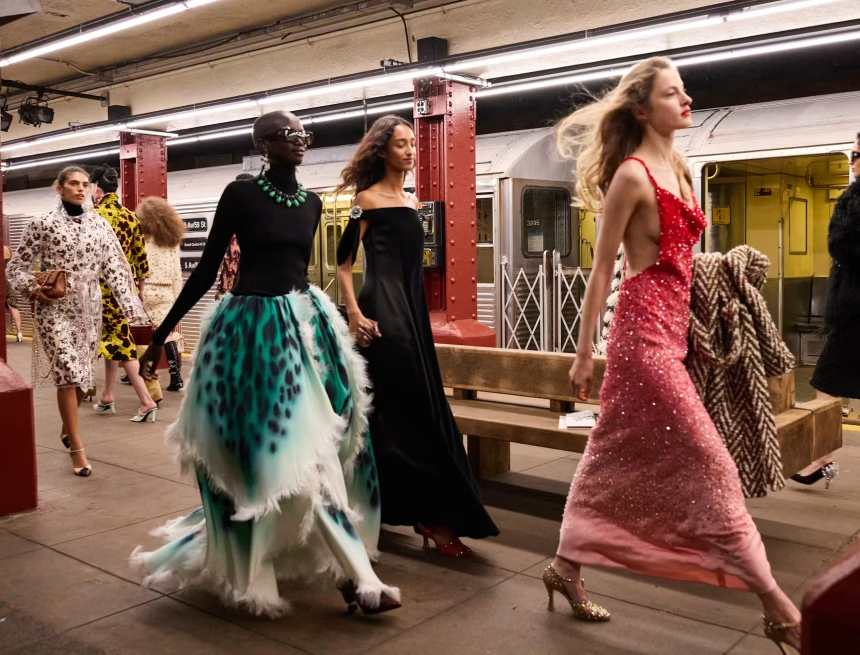
CHANEL is using the Métiers d’art 2026 campaign to do three things at once: introduce Matthieu Blazy’s vision, reassert the centrality of its Maisons d’art, and show how couture level craft can live on New York sidewalks not only on a runway. Shot by Craig McDean and filmed by Rahim Fortune, the campaign turns a cast of CHANEL women into moving characters in the city, each threaded with the work of Lesage, Massaro, Goossens, Lemarié, Atelier Montex, Maison Michel and the other ateliers of le19M.


A new chapter under Matthieu Blazy
Since 2002, Métiers d’art has been CHANEL’s annual rendezvous with the Maisons d’art: a collection designed to foreground the embroidery, feathers, jewelry, pleating, shoes and hats produced by its specialist ateliers. For 2026, Matthieu Blazy signs his first Métiers d’art collection for the House, and the campaign is the public face of that handover.
Blazy’s stated starting point is the idea that “fashion allows you to be whoever you want to be… almost a sense of inventing your own superpowers,” linking directly back to Gabrielle Chanel’s belief in clothes as tools of freedom and self‑invention. That mindset shapes both the silhouettes and the way the campaign is cast and shot: the collection is less about a single “CHANEL woman” and more about many personas sharing the same city.
New York as a stage for craft
Choosing New York as the campaign setting and as the narrative backdrop for Blazy’s Métiers d’art signals an important shift. Traditionally, the project has been tied to historic, often European locations; here, the Maison’s most artisanal work is placed in direct dialogue with a fast, cosmopolitan city.
McDean’s images and Fortune’s film follow an “eclectic league” of women across New York:
- Working girls, superheroes, students, socialites and everyday characters, each styled in different Métiers d’art looks.
- Scenes of women on the go subway entrances, sidewalks, crossings where leopard‑print tailoring, floor‑length gowns or hand‑painted skirts brush up against pretzel stands, newsstands and traffic lights.
This is a strategic move: it normalises exceptional craft by placing it in recognisable situations, reinforcing the idea that Métiers d’art is not museum costume but living wardrobe for a global city.
Casting: many CHANEL women, real and imagined
The campaign features a broad, high impact cast: Julia Nobis, Penelope Ternes, Bhavitha Mandava, Josephen Akuei, Jesi Evans, Anok Yai, Feng Jiao, Anne Vyalitsyna and Riley Lusher. Rather than centring one face, Blazy and CHANEL opt for a group that can embody multiple archetypes each with her own “superpower.”
This supports several goals:
- Reflecting plurality: Métiers d’art 2026 is described as a “joyful cavalcade of personalities,” and the casting reflects that promise on screen.
- Bridging couture and culture: Models like Anok Yai bring strong fashion credibility, while the diversity of the group ensures different audiences can see themselves in the campaign.
- Building narrative density: With many characters, McDean and Fortune can construct a filmic, almost series‑like storyboard, which suits the “moving through the city” storyline.
In short, the cast is less about one muse and more about a CHANEL multiverse that feels contemporary and open.
Fashion as “superpowers”: silhouettes and details
Blazy’s quote about fashion and superpowers is more than a soundbite; it’s visible in the clothes and accessories the campaign pushes forward:
- Wrap skirts, fluid pants and supple leather bags give real freedom of movement essential if your heroines are crossing streets rather than posing in salons.
- Classic codes the suit, two tone shoes, pearls, camellias are reworked across eras, with looks sliding from the 1920s to the 2020s, anchoring CHANEL’s past in present‑day dressing.
- Playful accessories leopard‑print headpieces; giraffe and squirrel bags; brooches shaped like does and Dalmatians; baseball caps inject humour and personality, turning each outfit into a slight exaggeration of a real New York type.
These choices are designed to resonate on multiple levels: couture clients see the richness of the craft; younger audiences see style ideas they can translate into their own looks.
Keeping the spotlight on the Maisons d’art
Despite the strong city storytelling, the campaign never loses sight of its core mission: highlighting the Maisons d’art. CHANEL makes a point of naming Lesage (embroidery), Massaro (shoes), Goossens (jewelry), Lemarié (feathers and flowers), Atelier Montex (embroidery) and Maison Michel (millinery) as key contributors, all part of the 11 ateliers housed at le19M in Paris.
In the visuals and film, their work appears as:
- Art Deco inspired embroideries and intricate tweeds from Lesage and Montex.
- Animal tweeds, feathered details and floral appliqués from Lemarié.
- Statement metalwork jewelry and headpieces from Goossens and Maison Michel.
By explicitly linking each flourish back to a named atelier, the campaign reminds viewers that Métiers d’art is about people and practices as much as clothes a key narrative for CHANEL as it continues to invest in le19M and its craft ecosystem.
Extending the show into visual culture
Finally, the campaign’s role is to extend the December show into 2026’s broader visual conversation. Where the runway presented the collection in a single, concentrated moment, McDean and Fortune’s work ensures it lives on across:
- Print and digital ads, editorial partnerships and retailer windows.
- Short‑form video and social storytelling that can be sliced into looks, characters or atelier spotlights.
- Cultural media coverage, which has already framed this as a “revolutionary debut” and a turning point for the Métiers d’art formula.