LVMH Sells Marc Jacobs to WHP Global as the Brand Enters a $9.5 Billion Fashion Platform

Jeanel Alvarado
By
Jeanel Alvarado
Jeanel Alvarado is a marketer and retail strategist, leveraging 15+ years of cross-disciplinary expertise in retail, e-commerce, technology, consumer and shopping trends. She is the former...
5 Min Read
LVMH Sells Marc Jacobs to WHP Global as the Brand Enters a $9.5 Billion Fashion Platform

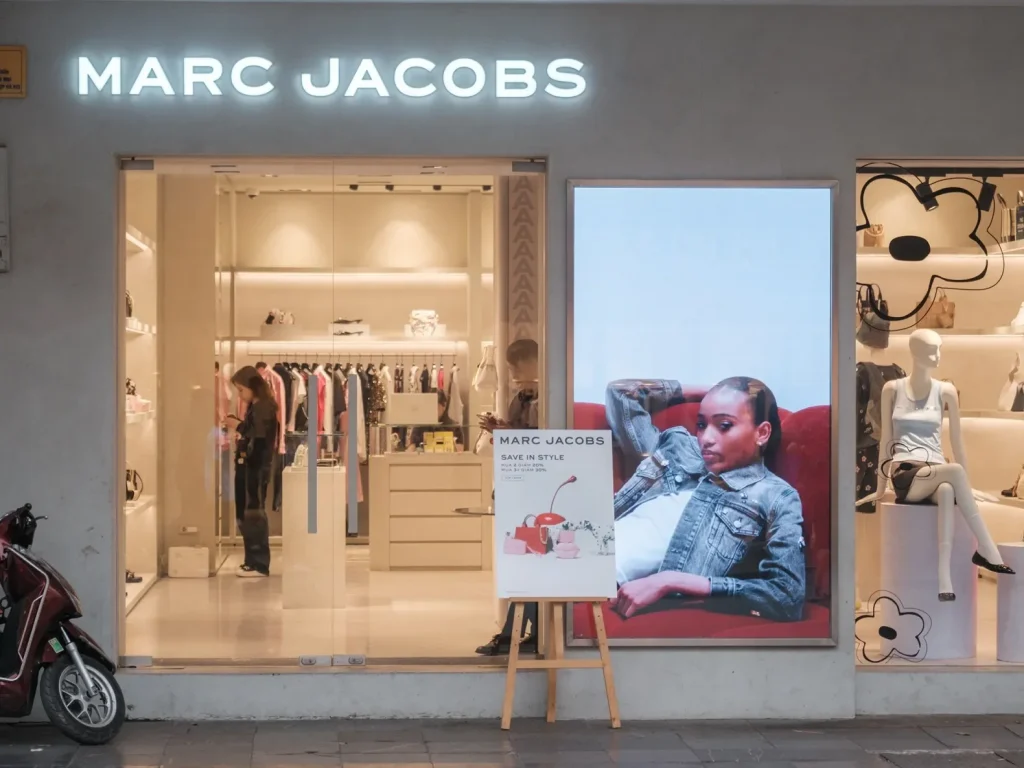
LVMH has agreed to sell the Marc Jacobs brand to WHP Global, in a deal that ends nearly 30 years of ownership but keeps Marc Jacobs himself in place as Founder and Creative Director while a new JV structure with G‑III Apparel Group drives the next phase of growth.

LVMH Exits Marc Jacobs After Nearly 30 Years

In a joint announcement from New York on May 14, 2026LVMH Moët Hennessy Louis Vuitton and brand management firm WHP Global confirmed they have entered into a definitive agreement for the acquisition of the Marc Jacobs brand from LVMHLVMH first took a majority stake in Marc Jacobs in 1997, and the deal brings that long running partnership to a close as the luxury group continues to fine tune its fashion and leather goods portfolio.

Over almost three decadesLVMH backed the brand’s expansion across handbags, small leather goods, ready to wear, footwear, eyewear and fragrance, helping cement Marc Jacobs as one of fashion’s most influential American names. The group credits this era with some of the label’s most iconic and commercially successful products, underscoring the role of the in house team and the designer’s “rare creativity and unique vision.”

Marc Jacobs Stays On As Creative Director

Crucially, the announcement confirms that Marc Jacobs will remain as Founder and Creative Director following the closing of the transaction, ensuring continuity across runway collections and fashion shows. In the release, Marc Jacobs said he is “forever grateful to Bernard Arnault for his support, belief and trust” over the last 30 years, and that he remains committed to his role as Creative Director of Marc Jacobs International as the brand enters “a bright new chapter.”

Bernard Arnault, Chairman and CEO of LVMHsaid that Marc Jacobs is “a designer of rare creativity and unique vision” whose impact on fashion is “undeniable,” thanking him for his contribution to both the Maison and the group over the last 30 years and expressing confidence that this new chapter will open “new avenues of opportunity” for the brand.

WHP Global’s New Cornerstone Brand

Once the deal closes, Marc Jacobs will become a cornerstone of WHP Global’s premium fashion vertical, alongside Vera Wangrag & bone and G‑STAR. With the addition of the Marc Jacobs brand, WHP Global will surpass USD $9.5 billion**** in global retail sales, significantly scaling its fashion footprint across high growth categories.

WHP Global’s model focuses on acquiring and managing brand IP and then growing those brands through a global licensing and partnership platform. Adding Marc Jacobs gives the firm a high profile luxury ready to wear and accessories name to anchor that strategy, complementing its existing portfolio that also includes brands such as ExpressBonobos and Anne Klein.

G‑III’s Role And The Joint Venture Structure

Contemporaneously with the transaction, G‑III Apparel Group, Ltd. will join WHP Global in the ownership of the Marc Jacobs brand, forming a 50/50 joint venture that will hold the brand’s intellectual property. According to G‑III’s own announcement, the company will invest around $500 million to acquire and manage the global Marc Jacobs operating business, while WHP Global will oversee licensing operations.

Under this structure, G‑III will run key parts of the brand’s global direct to consumer and wholesale businesses, using its “best in class” operating and merchandising capabilities, while WHP Global leverages its licensing platform to expand Marc Jacobs across categories and geographies. The companies expect the transaction to be initially dilutive for G‑III over roughly the first 12 months post closing but accretive thereafter as growth and synergies ramp up.

Strategic Implications For All Three Players

For LVMH, divesting Marc Jacobs is a portfolio move that allows the group to concentrate resources on its biggest global powerhouses such as Louis VuittonChristian Dior and Celine, while still preserving a close creative relationship with Marc Jacobs through shared history and mutual respect. The sale follows earlier transactions that saw G‑III acquire Donna Karan and DKNY from LVMH in 2016, underscoring the apparel group’s role as a go to operator for mature fashion brands.

For Marc Jacobs the brand, the new setup aims to pair a stable creative vision under Marc Jacobs himself with a growth engine built on WHP Global’s brand management and G‑III’s operational scale, from retail to wholesale. The deal is subject to customary closing conditions and is expected to close before year end, after which the focus will shift to using this new structure to accelerate global growth across handbags, ready to wear, shoes, fragrance and more.

Brand Background Marc Jacobs

Marc Jacobs International was founded in 1984 by Marc Jacobs and Robert Duffy on two core ideas: a love of fashion and a commitment to quality. The brand has grown by balancing tradition and innovation, channeling Jacobs’ exuberant creativity into collections that are described as rebellious, unpredictable, original, unique and authentic.

The company also emphasizes social impact, supporting over 75 charities and organizations worldwide, reflecting a generation that is conscious of humanitarian and social causes and positioning the brand as engaged with the communities around it.

Share This Article
Follow:
Jeanel Alvarado is a marketer and retail strategist, leveraging 15+ years of cross-disciplinary expertise in retail, e-commerce, technology, consumer and shopping trends. She is the former Senior Managing Director of the School of Retailing at the University of Alberta. Jeanel’s insights appear in Nasdaq, Entrepreneur, Fortune, TIME, and the US Chamber of Commerce, among others, with recurring commentary on top retailers and brands for financial markets, consumer insights, shopping trends, tech Innovation, and the luxury sector.