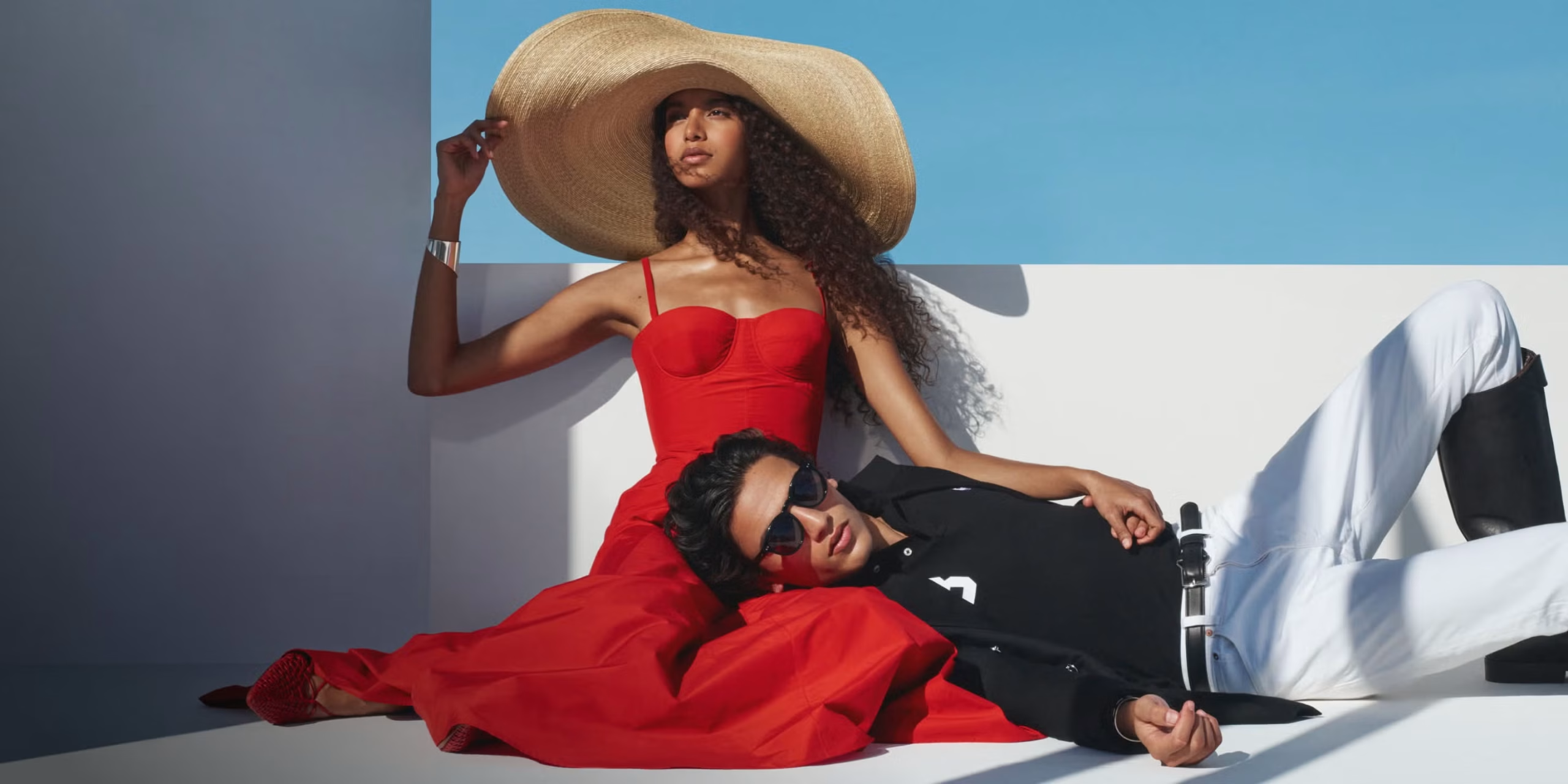


Hailey Bieber is the new face of Alaïa’s “Archetypes” Fall 2026 (Summer/Fall 26) campaign, a pared back, sculptural story shot by Tyrone Lebon inside Grace Mews, his London gallery space. Under creative director Pieter Mulier, the campaign focuses on a reduced visual language, putting Bieber, the clothes and the gallery’s architecture into direct, almost conversational tension.
A gallery as a fashion set
The “Archetypes” images were captured at Grace(s) Mews in London, the first time Lebon’s own gallery has been used as the setting for a fashion campaign. The space’s white walls, clean lines, glass furnishings and near monochrome palette act as a neutral frame, pushing every curve, fold and cut of the clothes into sharp relief.
Reviews describe the atmosphere as studio like and intimate, with soft light and minimal furniture stripping away distractions so that proportion, posture and texture become the main narrative. This choice of location deepens the artistic dialogue between Lebon and Alaïa, positioning the images somewhere between campaign and photographic exhibition.


Hailey Bieber as the Alaïa “Archetype”
For Bieber, this is her first campaign for Alaïa, and the visuals frame her as a contemporary embodiment of the Alaïa woman confident, unapologetically sensual and sharply defined. Across the series she appears in sculptural, body tracing looks, many of them bottomless or stripped back to the “naked shoe,” echoing Mulier’s runway commitment to “reduce, reduce… only beauty and clothes and a naked shoe.”
In several shots, Bieber wears long, curve hugging knit or jersey dresses and micro pieces that spotlight the body’s architecture as much as the garments’. The styling keeps hair and makeup polished but low key, underscoring the idea that the body and cut not accessories or set dressing carry the story.
Pieter Mulier’s reduced visual language
The campaign extends the philosophy of Alaïa’s Fall 2026 show, where Pieter Mulier spoke explicitly about refusing algorithm chasing maximalism. “To reduce, reduce,” he said of the collection. “No bags, no jewelry. Only beauty and clothes and a naked shoe. Because that’s what Azzedine did.”
Critics note that “Archetypes” feels less like a celebrity driven image grab and more like an exercise in reduction, using a famous face to test how little is needed to convey the Alaïa codes. The camera stays close, avoiding heavy theatricality or cinematic tricks, and instead leans into the subtle power of line, fabric and stance.
Clothes as wearable architecture
Within this stripped back frame, Alaïa’s pieces read almost as wearable architecture. Bias cuts, clingy knits and precise seams emphasize the body’s volume and negative space, echoing the gallery’s own geometry. The interplay of light and shadow across ribbing, mesh and smooth surfaces calls back to Azzedine Alaïa’s legacy as a “sculptor of the body,” now filtered through Mulier’s modern lens.
The overall impression is of a house that, rather than chasing trend churn, continues to refine a singular visual language, with Hailey Bieber used as a recognisable yet malleable figure to explore its “archetypes.” The Archetypes collection is now available to shop on maison-alaia.com, anchoring the campaign firmly to product while preserving its art first tone.