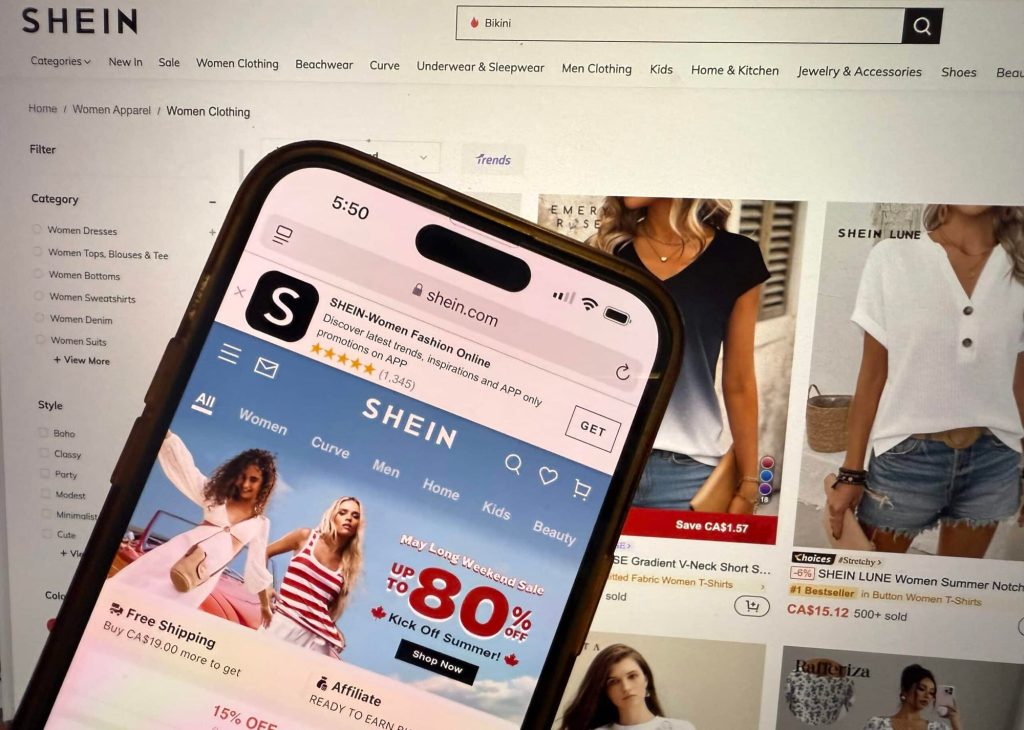
Millions of packages arrive in America daily without a cent of tax paid. This century-old loophole has quietly fueled the meteoric rise of Chinese ultra-fast fashion giants Shein and Temu. But the party ends May 2, 2025.
The Trump administration is shutting down the nearly century-old “de minimis” exemption, which allowed these companies to avoid billions in import duties. This tax shield permitted packages valued under $800 to enter the United States duty-free, creating a competitive advantage that traditional retailers couldn’t match.
The scale is staggering. In fiscal 2022, 83 percent of all U.S. e-commerce imports exploited this loophole. Between 2015 and 2023, exempted shipments swelled over 600 percent, eventually reaching 1.36 billion packages worth approximately $66 billion by 2024.
Shein and Temu alone account for roughly 30 percent of all packages entering the U.S. daily.
How The Loophole Shaped An Industry
The de minimis exemption wasn’t created for e-commerce.…
It originated as an administrative convenience to avoid paperwork on small shipments. Yet it became the foundation of a business model that revolutionized retail. Shein’s ultra-fast fashion system depends on short-run manufacturing in South China, where designs become garments in as little as 10 days.
The company adds up to 10,000 items to its site daily, maintaining approximately 600,000 products for sale at any given time. Most sell for around $10. This model delivered devastating blows to American retailers. Forever 21, which recently began liquidating its U.S.
stores, explicitly blamed its downfall on companies like Shein and Temu, noting that “non-U.S. retailers” selling “at drastically lower prices” had “significantly impacted the Company’s ability to retain its traditional core customer base.” The New Reality The White House didn’t stop at closing the loophole.
On April 9, 2025, the administration tripled existing levies, increasing duties to 90% of product value or $75 per item, rising to $150 after June 1. The companies are scrambling to adapt. Temu is rapidly shifting to a “local fulfillment model” with U.S. orders handled by sellers already in the country. Most…
Discussion
0 Comments
No comments yet
Start the conversation
Share your take on this story and help shape the discussion.
Sign in to join the discussion.