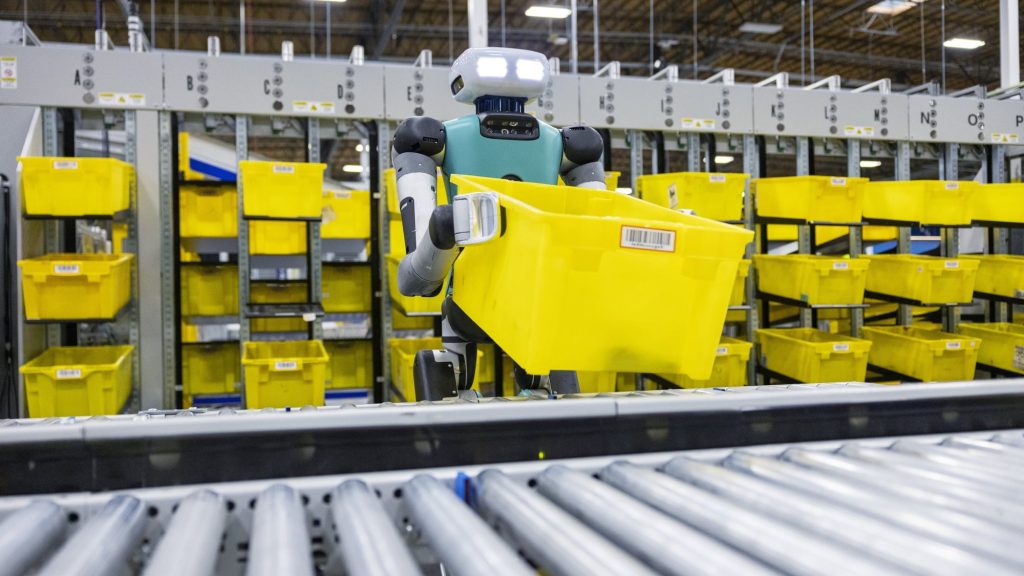
In a major signal of where the future of warehouse work may be headed, Amazon is accelerating its automation strategy—with plans that could see an estimated 600,000 U.S. roles replaced by robots over the next few years. The tech giant’s internal documents envision an extensive shift toward AI-powered robotics, transforming the scale and design of its massive fulfillment network.
Robots on the Rise
Amazon’s warehouses have long been test beds for automation, but the pace is clearly intensifying. The New York Times notes that company executives are discussing a gradual transition to robotic systems capable of performing virtually all tasks that currently require human labor, including sorting, picking, packing, scanning, and transporting goods.
A Legacy of Innovation and Controversy
Amazon has long positioned itself as a pioneer in robotics. Since its 2011 acquisition of Kiva Systems, the company has incorporated tens of thousands of mobile robots across its network. These…
wheeled units transport inventory around warehouses to human workers, who still perform the complex tasks of picking and packing. But recent generations of machinery are quickly narrowing that gap.
Warehouse employees already face strict productivity demands; now, they could face large-scale displacement as automation advances into what were once secure hourly roles. The Economics Behind the Strategy From a business standpoint, automation has clear benefits.
Warehouse labor costs are among Amazon’s largest expenses, particularly in markets such as California, Texas, and New Jersey, where wages have been steadily rising. The efficiencies gained through robotics will enable faster delivery while investing more in technology and less in personnel turnover.
The economic logic is simple: more robots mean less downtime, lower training costs, and stable output during volatile labor markets. The Human Impact Workers’ advocates say the figures are staggering. If projections are accurate, 600,000 U.S…
Discussion
0 Comments
No comments yet
Start the conversation
Share your take on this story and help shape the discussion.
Sign in to join the discussion.