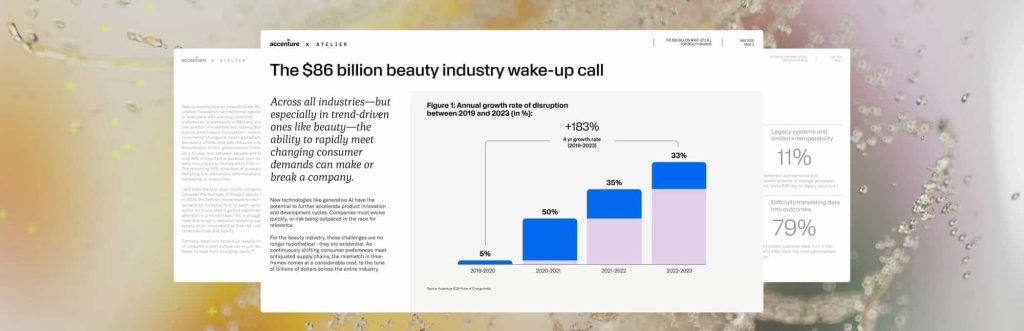
Outdated Systems Slow Growth While business transformation in beauty has accelerated by 183% since 2019, the underlying manufacturing infrastructure has lagged behind. Only 13% of companies say their supply chain capabilities fully support their business goals, and just 11% have architected, interconnected systems.
Most brands now face a pivotal decision: overhaul manufacturing approaches or risk losing ground to more agile competitors. Key Market Pressures The report identifies several urgent challenges: Consumer Expectations: 64% of consumers want brands to respond faster to their needs, but 59% of companies take over a year to adapt.
Innovation Decline: From January to May 2024, only 46% of launches were net-new products, down from 63% in 2015. Supply Risk: 59% of brands still depend on single-source suppliers, increasing vulnerability. Data Gap: 79% of executives struggle to leverage consumer data for personalized experiences.
Composable Manufacturing: A New Solution To address these issues, the report introduces composable manufacturing—a flexible, AI-native model that unites the entire manufacturing ecosystem on a single platform. This approach allows beauty brands to react…