Schulman Era Takes Hold As Burberry Posts Double Digit Q4 Growth In Greater China And Americas

Burberry's FY2026 results show a positive shift with 2% growth in comparable store sales and an adjusted operating profit of £160 million.

Jeanel Alvarado
By
Jeanel Alvarado
Jeanel Alvarado is a marketer and retail strategist, leveraging 15+ years of cross-disciplinary expertise in retail, e-commerce, technology, consumer and shopping trends. She is the former...
5 Min Read
Schulman Era Takes Hold As Burberry Posts Double Digit Q4 Growth In Greater China And Americas

Burberry FY2026 results landed on May 14, and for the first time in two years the numbers moved in the right direction. Comparable store sales rose 2% for the year ended March 28, 2026, reversing a 12% decline in fiscal 2025. Adjusted operating profit jumped to £160 million from £26 million a year earlier. Reported operating profit reached £115 million against a £3 million loss in 2025. Full-year revenue came in at £2.42 billion, flat at constant exchange rates and down 2% on reported rates.

The trajectory within the year matters as much as the annual total. Comparable sales grew 3% in Q3 and accelerated to 5% in Q4, with Greater China and the Americas each delivering 10% comparable growth in that final quarter. That sequential improvement is what CEO Joshua Schulman pointed to when he described fiscal 2026 as “a meaningful inflection point.” Coming from a brand that was issuing profit warnings and suspended its dividend as recently as 2024, it is.

Schulman joined Burberry in July 2024, replacing Jonathan Akeroyd who left after less than two and a half years during which the share price declined 40%. Schulman’s previous roles included CEO of Coach, Michael Kors, and Bergdorf Goodman. His mandate at Burberry was specific: stop trying to compete at the very top of luxury and rebuild around what the brand actually owns. Under Akeroyd, Burberry had pushed into a narrow high-fashion aesthetic and moved away from the outerwear and identifiable British references that built the brand’s global recognition. The product became harder to access without becoming more desirable.

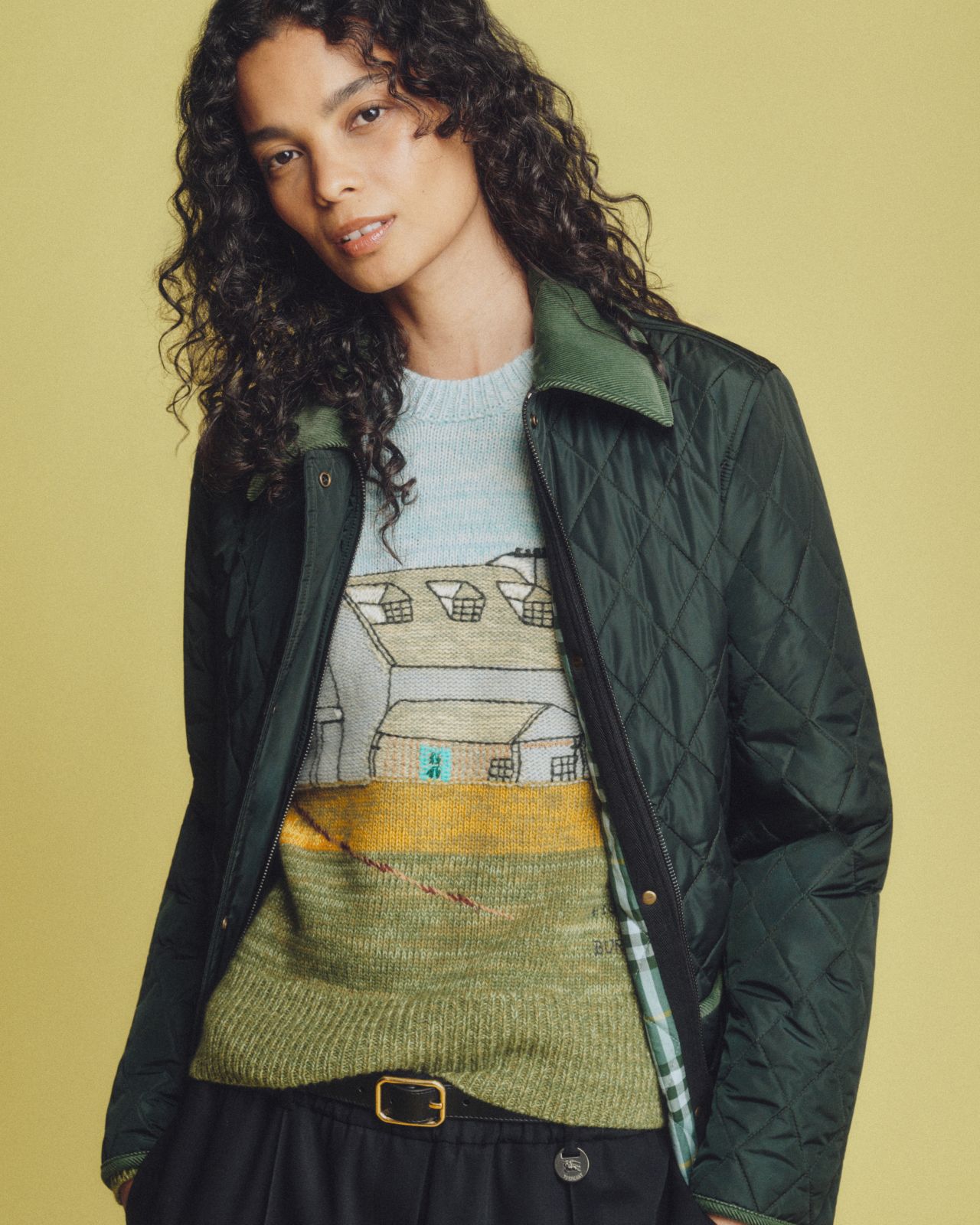
The Burberry Forward strategy has three visible expressions. First, outerwear and the trench coat are back at the centre of the product range and the marketing. Second, the brand is spending a “high-single-digit” percentage of sales on marketing, with specific campaigns and activations in the US and China. Third, creative director Daniel Lee has been given more room to work across different price tiers rather than concentrating on runway-level product that most customers never buy. The Lyst Index returned Burberry to its hottest brands list in Q2 2025 at position 17, rising to 13 by Q3.

Fiscal 2026 Results at a Glance

Metric FY2026 FY2025
Revenue £2.42B £2.46B
Comparable Store Sales +2% -12%
Q4 Comparable Sales +5%
Adj. Operating Profit £160M £26M
Reported Operating Profit £115M £(3)M loss
Greater China Q4 Comp +10%
Americas Q4 Comp +10%

Source: Burberry Group PLC FY2026 Preliminary Results, May 14, 2026 | ir.burberryplc.com

What Still Has to Work

Two risks sit alongside the better numbers. EMEA was the only region that did not grow in fiscal 2026, and Europe remains below its pre-crisis levels. That matters because Europe is where Burberry‘s tourist-driven luxury customer traditionally converts at the highest rates, and those shoppers are currently being cautious. The second risk is macro. Burberry operates in a segment of the market, accessible luxury, where consumers are being squeezed from both ends. True luxury brands have raised prices so far that the Burberry customer who might have stretched upward has been priced out. But value brands are competing hard on design quality at lower prices, giving that same customer a credible downward alternative. Schulman‘s positioning of Burberry as attainable British luxury rather than aspirational high fashion is the right response to that squeeze, but executing it while protecting margin requires the brand to keep growing volume without leaning on discounting. Q1 FY2027 results, covering April to June 2026, will be the first test of whether the Q4 momentum carried into the new year.

Sources: Burberry FY2026 Preliminary Results (May 14, 2026); The Impression (May 2026); WWD (May 14, 2026); FashionUnited (Jan 2026); Business of Fashion (Jan 2026)

TAGGED:
Share This Article
Follow:
Jeanel Alvarado is a marketer and retail strategist, leveraging 15+ years of cross-disciplinary expertise in retail, e-commerce, technology, consumer and shopping trends. She is the former Senior Managing Director of the School of Retailing at the University of Alberta. Jeanel’s insights appear in Nasdaq, Entrepreneur, Fortune, TIME, and the US Chamber of Commerce, among others, with recurring commentary on top retailers and brands for financial markets, consumer insights, shopping trends, tech Innovation, and the luxury sector.