What Is XO Armor? 3D Printing Meets Real-Time, Anatomical Customization XO Armor leverages smartphone-based 3D scanning, proprietary adaptive modeling software, and in-house additive manufacturing to create personalized, anatomically precise protection for injuries and performance.
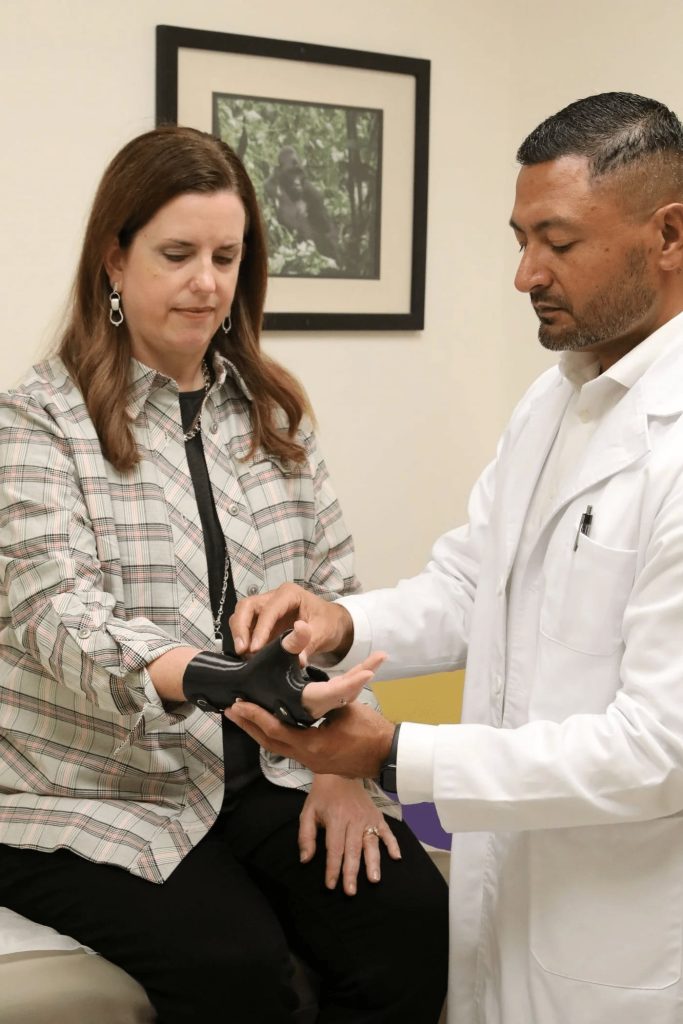
Their service allows a trainer, clinician, or equipment manager to scan a body part using a phone or tablet, choose attributes (thickness, flexibility, coverage), and 3D-print the final product on-site in about 45 minutes.
Recent use cases include pro football linemen with fractured wrists returning to play, surgeons fitting custom post-op braces, special-ops soldiers training for deployment, and high school athletes needing adaptive splints or guards.The typical workflow provides a superior fit, fewer follow-up visits, and up to 80% time savings compared to traditional orthotic and casting processes.
The Origin Story & Founders XO Armor was born in 2019 when Auburn mechanical engineering professor Dr. Michael Zabala was asked to help provide a protective device for an injured Auburn football player who needed to play the next game. After designing—and 3D-printing—a fit-for-purpose splint, the device…