The Gulf Is Rewriting Luxury’s Growth Map
As China’s momentum moderates, the Middle East is becoming the industry’s most reliable rising engine
For most of the past decade, luxury brands built their growth stories around China. The country’s expanding middle class, appetite for status goods, and booming travel spending made it the industry’s most watched market. That story is becoming more complex. According to Bain & Company’s latest Altagamma study, Chinese luxury spending is projected to decline 3-5% in 2025 as consumers pivot toward domestic brands and experiential categories. Japan’s post-pandemic tourism surge is also fading. Europe is softening.
Into that gap, the Gulf is stepping forward, and the numbers are starting to make the case at scale.
A Market Being Taken Seriously
Deloitte’s Global Powers of Luxury 2026 report, based on a survey of over 400 senior luxury executives, ranks the Middle East as the world’s third-largest engine for luxury consumption growth, behind China and Japan. At 17.9% of executive growth expectations, the region is outpacing every other emerging market, driven by wealthy young consumers, government-backed tourism investment, and a structural shift toward experience-led spending.
The UAE and Saudi Arabia are the twin anchors of that momentum. The UAE luxury goods market, valued at roughly $8.5 billion in 2025, is projected to reach nearly $12 billion by 2031. Saudi Arabia, whose luxury market hit $11.1 billion in 2025, is forecast to more than double by 2034, growing at a CAGR approaching 9%. Luxury fashion retail in the Kingdom alone is projected to post 19% year-on-year growth in 2025, the fastest in the GCC.
Why Brands Are Paying Attention Now
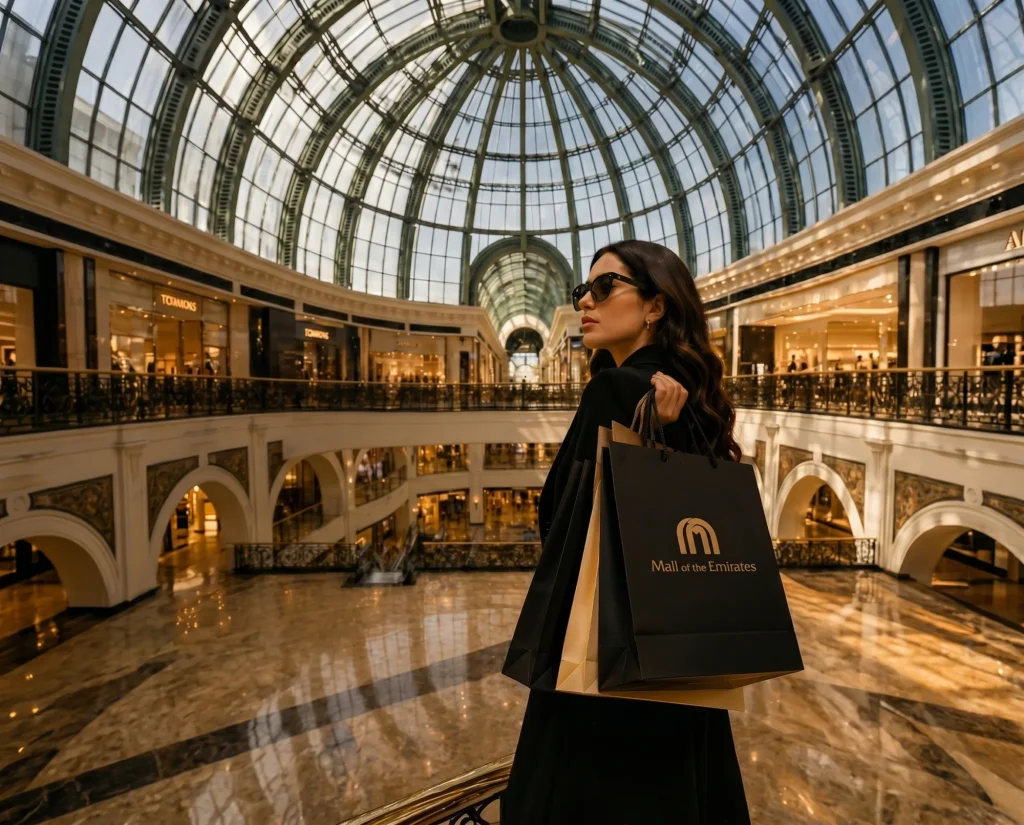
Prada reported 21% revenue growth in the Middle East across the first nine months of 2025. Majid Al Futtaim’s lifestyle sector grew 26% and is adding over 30 luxury brand locations in 2025. Dolce & Gabbana’s Diriyah flagship in Riyadh is now among the brand’s largest stores globally. These are not experimental bets, they are read-and-react moves by brands watching where actual spending is happening.
Several structural factors make the Gulf different from previous emerging market surges. Government-backed infrastructure investment is creating luxury ecosystems rather than retail clusters: Diriyah Square alone will deliver 186,000 square meters of luxury retail. Saudi Arabia welcomed 122 million visitors in 2025. Personal luxury sales across the Gulf rose 6% to $12.8 billion in 2024 and are projected to reach $15 billion by 2027, per the Chalhoub Group.
| Market | 2025 Market Size | Projected CAGR | Key Driver |
| UAE | ~$8.5B | 5.7% (to 2031) | HNW immigration + tourism |
| Saudi Arabia | ~$11.1B | 8.9% (to 2034) | Vision 2030 + young demographics |
| Gulf personal luxury | $12.8B (2024) | Toward $15B by 2027 | Tourism + domestic demand |
Not Just Tourist Spending
The more significant long-term signal is domestic demand. Saudi Arabia has nearly 340,000 millionaires today, with the millionaire population expected to grow substantially through 2029 (UBS Global Wealth Report 2025). Women, now accounting for over a third of the Saudi workforce, are a fast-expanding luxury consumer base. The UAE’s personalisation appetite is among the highest globally, 80% of consumers expect tailored products and communications, according to Deloitte. Brands that treat the Gulf as a tourism play are underestimating the durability of what is being built.
The Gulf is no longer a market luxury brands visit, it is one they are building for. The infrastructure is permanent, the consumer base is young and growing, and the governments backing it are not retreating. For brands still treating the region as a secondary line in their annual reports, the window to reposition is narrowing. The ones moving now, opening flagships, localising product, investing in personalisation, are not chasing a trend. They are planting flags in what may be the most structurally sound growth story luxury has left.