Etsy Launches ChatGPT App to Turn Conversational Search Into a New Discovery Engine For Handmade and Vintage

Shipra Bohara
6 Min Read
Etsy Launches ChatGPT App to Turn Conversational Search Into a New Discovery Engine For Handmade and Vintage

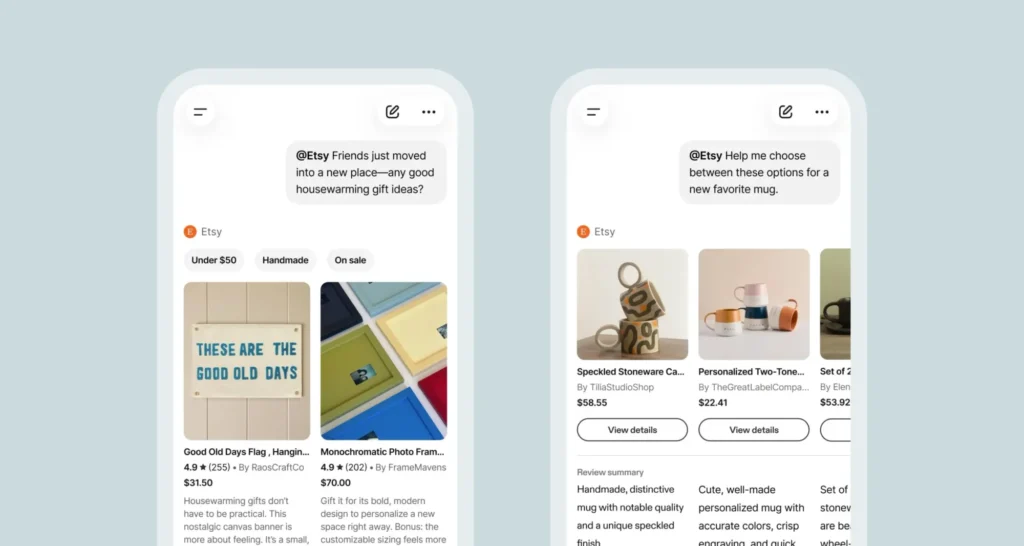
Etsy is taking another step into AI powered discovery with the beta launch of the Etsy app in ChatGPT, letting people search and compare Etsy items conversationally, while continuing to test AI shopping across Google, ChatGPT Instant Checkout, and Microsoft Copilot so sellers can be discovered wherever shoppers start their journeys.

From Search Bar To Conversation

For years, Etsy has invested in search and SEO so that handmade and vintage products could surface in a world dominated by standardized catalog retail. Its latest move pushes that evolution from rigid keywords to natural language, where shoppers can describe what they want in plain English (or other languages) and get tailored product suggestions they can refine in conversation.

In a post titled “From Keywords to Conversation,” Chief Product and Technology Officer Rafe Colburn explains that Etsy’s goal with AI channels has been consistent: “be present, test, and learn,” then use those learnings to build better discovery experiences on Etsy itself.Etsy Launches ChatGPT App to Turn Conversational Search Into a New Discovery Engine For Handmade and Vintage

How The Etsy App In ChatGPT Works

The new Etsy app in ChatGPT is live in beta and acts like a conversational layer on top of Etsy’s marketplace inventory. A user can tag @Etsy and type a prompt such as “@Etsy Help me find a Mother’s Day gift under 100 for my mom who loves gardening”, and the app responds with relevant Etsy listings that can be browsed, compared, or clicked through to Etsy for more details.

Because the interface is conversational, shoppers can add nuance as they go: clarifying budget, style, material, or constraints like “fits a small apartment” or “ship to India by next week,” narrowing the results in a more natural way than tweaking keywords in a search bar. The results draw directly from Etsy’s live catalog, so sellers do not need to do extra integration work; their items appear if they already meet Etsy’s listing and metadata standards.

What Etsy Learned From Instant Checkout

This app builds on an earlier integration: in September 2025Etsy became the first live integration partner for ChatGPT Instant Checkout, allowing US users to discover and purchase Etsy items directly in chat. That experience showed that ChatGPT works well as a discovery channel: many shoppers chose to click through to Etsy to learn more before finalizing a purchase, rather than checking out entirely inside the chat interface.

Those behavioral insights are shaping the new app’s design. Instead of pushing instant transactions, the Etsy app in ChatGPT emphasizes richer product exploration, comparison and context, mirroring how Etsy’s core customers like to browse for unique and meaningful items.

Meeting Buyers Where AI Shopping Happens

Etsy’s broader AI strategy is to make sure its sellers “show up” wherever AI assisted shopping is happening. Beyond ChatGPT, the company has:

  • Partnered with Google on AI powered shopping integrations so Etsy items surface in new search experiences.
  • Become an early partner for Microsoft Copilot Checkout, working with Microsoft and Stripe so Copilot users in the US can discover and pay for Etsy products in chat.
  • Used the Agentic Commerce Protocol and Stripe’s “agentic commerce” tooling to keep Etsy sellers as the merchant of record while AI agents handle parts of discovery and checkout flows.

All of this is designed to shorten the path from inspiration to purchase without adding complexity for sellers, while ensuring Etsy’s handmade, vintage, and specialty items are visible in new AI driven interfaces.

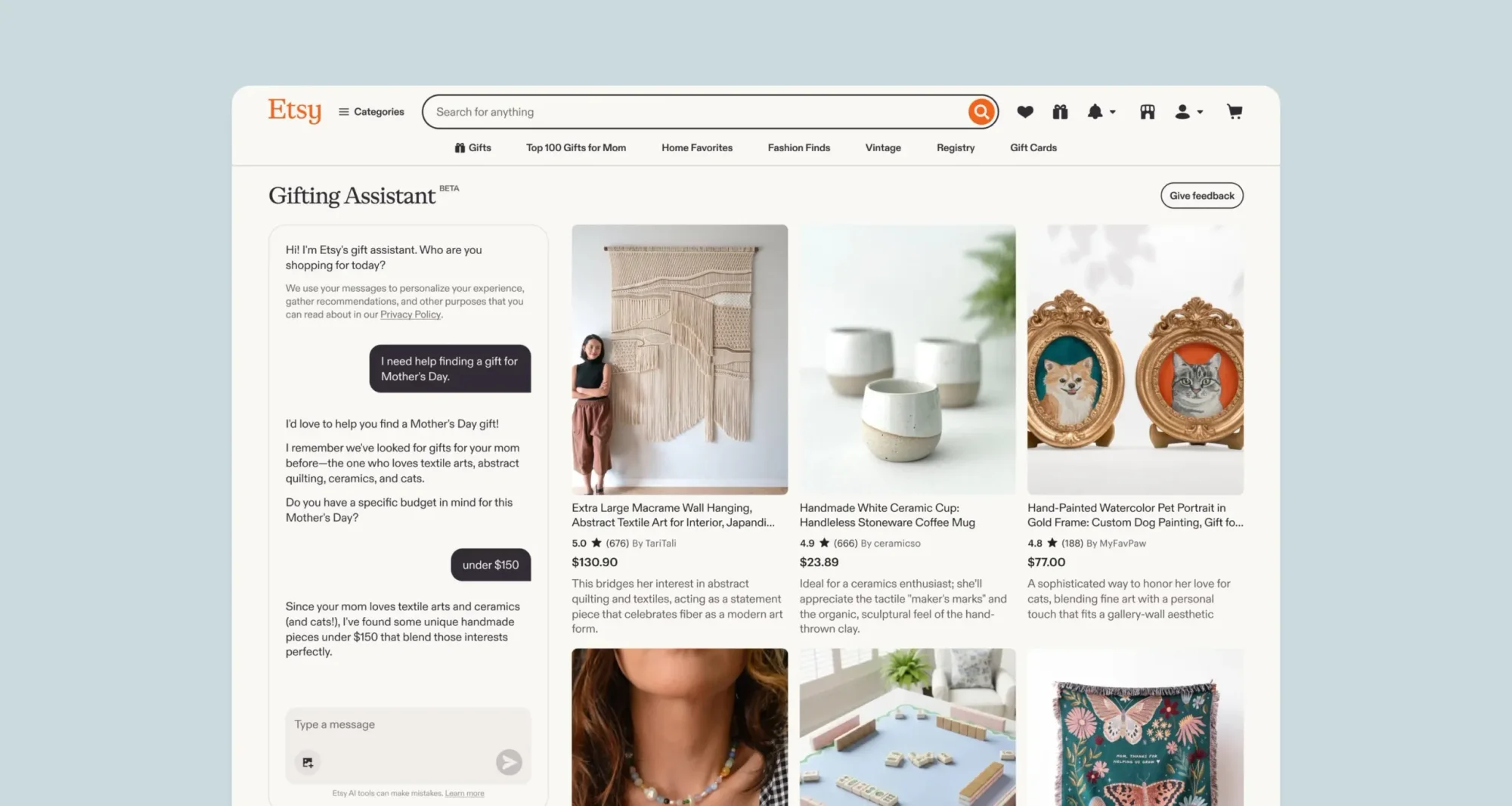
Etsy stresses that its work with AI platforms is not just about incremental traffic, but about learning where and how conversational search truly helps shoppers. As part of that, Etsy is also testing a beta conversational search experience on its own site, initially focused on helping people find gifts.

By comparing how shoppers phrase requests in ChatGPT, Copilot and on Etsy’s own conversational tools, the company hopes to get earlier insight into when Etsy is relevant, what language buyers naturally use, and which experiences actually drive satisfaction and conversion. Those insights then inform ranking algorithms, metadata requirements and UX design across Etsy’s main marketplace, effectively closing the loop between external experiments and internal product development.

What It Means For Etsy Sellers

For Etsy sellers, these initiatives are meant to expand the number of “front doors” into their shops without forcing them to master each new AI platform individually. As long as products are listed with strong photos, accurate attributes and clear descriptions, Etsy’s integrations can surface them in conversational environments such as ChatGPT or Copilot, where shoppers increasingly start their discovery journeys.

At the same time, Etsy’s “test and learn” stance means the team is actively monitoring which prompts, product types and scenarios perform best, and iterating on ranking and presentation so sellers show up more accurately and competitively over time. For a marketplace built on individuality and serendipitous finds, the long term bet is that conversational AI can make it easier for buyers to articulate what they want, and easier for the right Etsy listings to be found.

TAGGED:
Share This Article