The fashion industry is complex, with many different brand players and levels of influence. At the top of this industry is the fashion pyramid, a hierarchy that dictates the power and influence of different fashion brands. This article will break down the fashion pyramid and explain its importance in the fashion industry.
What is The Fashion Pyramid of Brands?
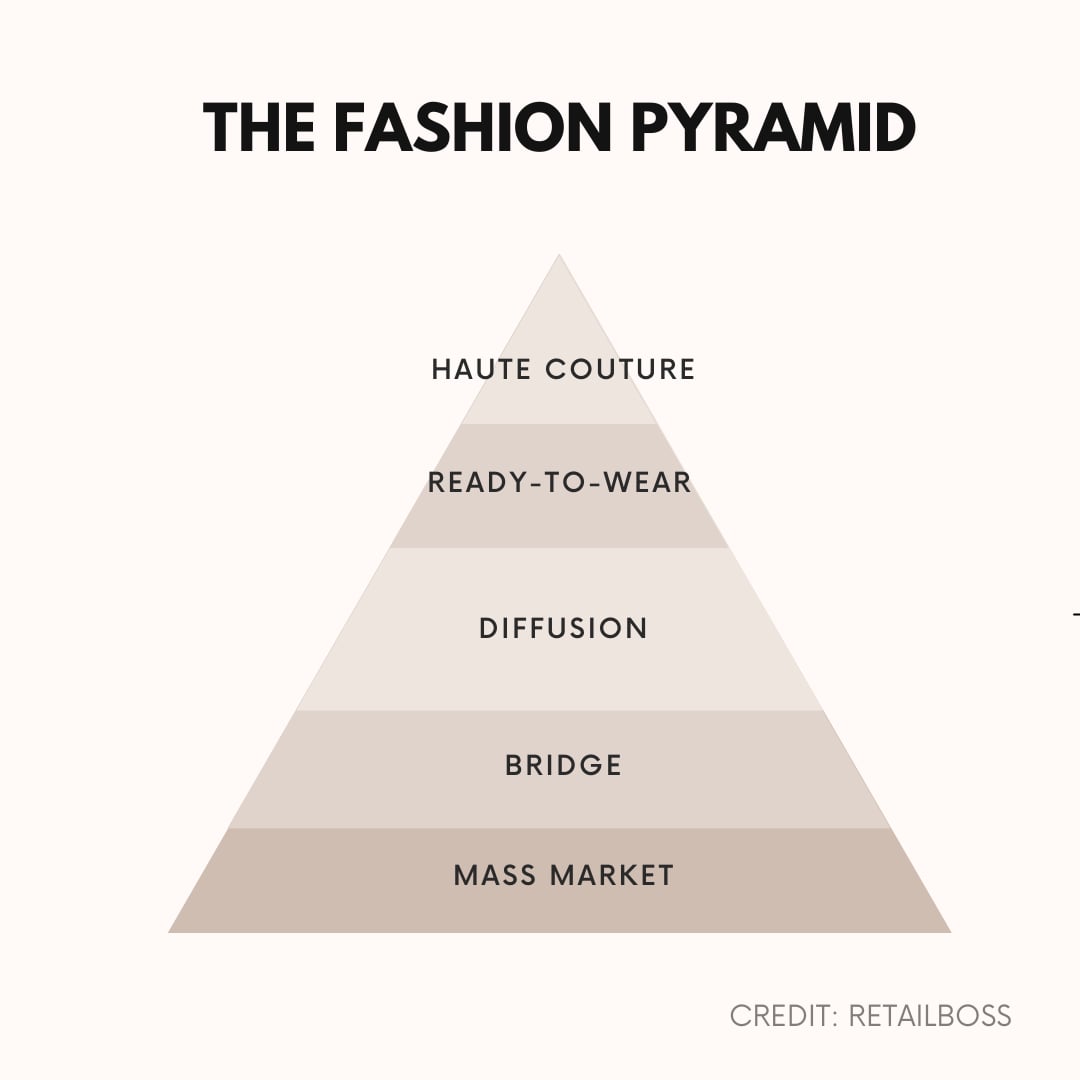
The Fashion Pyramid model provides a framework for brands to position themselves effectively within the market. With its five well-defined levels: Mass Market, Bridge Fashion Brands, Diffusion, Ready-to-Wear, and Haute Couture—the pyramid demystifies the hierarchy within the sartorial sphere.
Each level represents a different fashion industry segment, catering to a unique set of consumer preferences and financial brackets, from the affordable, trend-driven mass-market segment to the luxurious, bespoke domain of haute couture.
The Importance of the Fashion Pyramid
The fashion pyramid is important because it dictates the power and influence of…
different fashion brands. It also reflects the consumer’s buying habits and preferences. Fast fashion brands may have a larger customer base, but designer and haute couture brands hold more prestige and influence in the industry. The fashion pyramid also influences fashion brands’ sustainability and ethical practices.
Fast fashion brands are often criticized for their negative impact on the environment and labor practices, while designer and haute couture brands are expected to uphold higher standards.
The Five Levels of The Fashion Pyramid of Brands Credit: The Fashion Pyramid of Brands, RETAILBOSS The hierarchy aligns with Maslow’s hierarchy in that luxury items at the top correspond to self-fulfillment desires, while mass-market items cater to basic physiological needs.
The Fashion pyramid is structured with the most exclusive and expensive brands at the top and the most accessible and affordable brands at the bottom…
Discussion
0 Comments
No comments yet
Start the conversation
Share your take on this story and help shape the discussion.
Sign in to join the discussion.